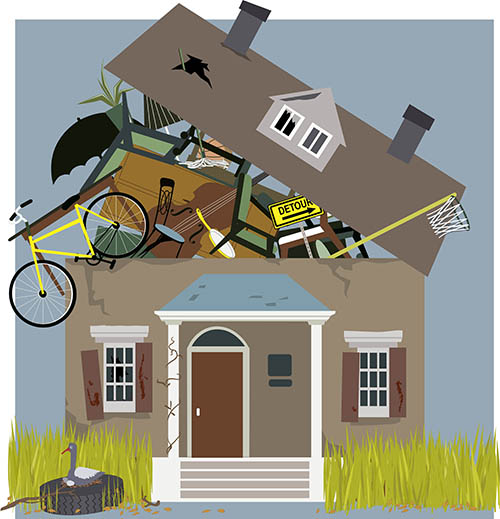
Hoarding
Hoarding Cleanup Service Chula
When a hoarding situation develops, the scale of the challenge often overwhelms families and property managers alike. A hoarding cleanup service in Chula requires specialized expertise that goes far beyond standard janitorial work. Econ Biohazard Services, operating statewide across Georgia with particular emphasis on Macon and surrounding areas, understands that hoarding cleanup involves physical, emotional, and regulatory dimensions that demand professional intervention. This guide addresses the analytical realities of hoarding remediation and why specialized cleanup services exist as a necessary solution.
Hoarding situations create legitimate health and safety concerns. When excessive accumulation occurs over months or years, it generates structural damage, pest infestation, mold proliferation, and biohazard exposure. Property damage assessment becomes complicated because moisture intrusion, rodent waste, and bacterial colonization affect building integrity in ways untrained personnel cannot properly evaluate. Insurance companies recognize hoarding cleanup as a legitimate claim category precisely because the remediation scope exceeds standard cleaning-it requires industrial-grade decontamination, waste classification, and sometimes structural assessment.
What Makes Professional Hoarding Cleanup Different From Standard Cleaning?
The distinction between standard cleaning and professional hoarding remediation centers on three core factors: hazard identification, regulatory compliance, and volume management. When comparing a basic cleaning service to a specialized hoarding cleanup service in Chula, the differences become immediately apparent in methodology and equipment deployment.
Standard cleaning addresses visible dirt and surface disorganization. Professional hoarding remediation, by contrast, must identify and safely manage biohazardous materials including animal waste, decomposing organic matter, mold colonies, and potential pathogenic bacteria. Trained technicians assess what appears visually and what remains hidden-in wall cavities, beneath flooring, and within HVAC systems. Because hoarding environments frequently harbor unknown contaminants, the cleanup process requires industrial hygiene protocols rather than consumer-grade products.
Regulatory compliance adds another layer. OSHA and EPA standards govern how biohazardous waste must be contained, transported, and disposed of. A hoarding cleanup service operating in Georgia must follow state regulations regarding medical waste, pathogenic material, and environmental contamination. Property owners attempting DIY cleanup or hiring unlicensed services face potential liability if remediation fails to meet these standards, particularly if future occupants develop health issues traceable to incomplete decontamination.
Volume and logistics present practical challenges that distinguish professional services. A severe hoarding situation can involve thousands of pounds of accumulated material requiring categorized disposal-recyclables separated from contaminated items, hazardous materials properly documented, and legitimate possessions recovered where possible. This process demands specialized equipment, trained personnel working in coordinated teams, and appropriate waste management partnerships.
| Factor | Standard Cleaning | Professional Hoarding Cleanup |
|---|---|---|
| Hazard Assessment | Surface-level evaluation | Industrial hygiene inspection with documentation |
| Equipment | Vacuum, mop, basic chemicals | HEPA filtration, decontamination systems, personal protective equipment |
| Regulatory Knowledge | General knowledge | OSHA and EPA compliance trained |
| Waste Management | Standard trash disposal | Categorized biohazard disposal with tracking |
| Timeline | Hours | Multiple days depending on severity |
| Post-Cleanup Verification | Visual inspection | Air quality testing, pathogen verification |
How Do Property Owners Navigate Insurance and Financial Aspects of Hoarding Cleanup?
Insurance coverage for hoarding cleanup represents a significant analytical question. Data suggests that many property owners delay remediation because they assume the cost falls entirely on them. However, when hoarding creates conditions that damage property structure or create health hazards affecting adjacent units in multi-family settings, insurance companies frequently classify the situation as a valid claim.
The process requires documentation. A professional hoarding cleanup service in Chula operates with the understanding that insurance carriers need detailed assessment-photographs of affected areas, expert evaluation of damage extent, and specification of remediation scope. Companies like Econ Biohazard Services facilitate this process by providing documentation suitable for insurance submission and by maintaining relationships with carriers that streamline approval processes.
When comparing cost structures, professional services typically charge based on square footage affected, complexity level, and required disposal protocols. While initial quotes may seem substantial, the analytics of comprehensive remediation reveal cost efficiency-incomplete cleanup often necessitates repeat services when contamination recurs or when regulatory inspections identify deficiencies. Full professional remediation, though initially more expensive, typically proves more economical than partial approaches.
Property managers face additional considerations. When hoarding occurs in rental properties, the cleanup becomes part of property restoration, often covered under landlord insurance or security deposit provisions depending on lease terms and state regulations. Licensed professionals understand these nuances and work within legal frameworks that protect both property owners and tenant rights.
Executors managing estate cleanup also benefit from professional services. When hoarding situations exist within inherited properties, executors need expert assessment to determine whether cleanup costs should be addressed before sale, after sale, or through negotiated buyer concessions. A professional hoarding cleanup service operating statewide across Georgia provides the objective assessment necessary for these decisions.
Financial planning becomes straightforward when services are transparent. Professional companies provide upfront estimates after on-site assessment, identify insurance possibilities, and explain the remediation timeline. This transparency reduces the overwhelm that often accompanies these situations and allows decision-makers to plan appropriately.
What Does the Actual Cleanup Process Involve?
Understanding the remediation process reduces anxiety and uncertainty. Professional hoarding cleanup follows a documented sequence: assessment, categorization, removal, decontamination, and verification. Each phase serves specific purposes within the compliance framework.
Assessment begins with visual inspection and air quality testing. Technicians document the environment, identify biohazards, photograph conditions, and establish baseline data. This phase typically requires 1-3 hours for moderate situations and longer for severe cases. The output becomes the remediation plan-the blueprint for everything that follows.
Categorization happens simultaneously with removal. Accumulated items require sorting into categories: hazardous materials requiring special disposal, potentially salvageable items, items for donation or recycling, and legitimate possessions to preserve. This process demands judgment and training-technicians must balance thorough contamination removal against recovering items that hold value to residents or estates.
Removal and transport follow strict protocols. All contaminated materials require double-bagging or specialized containers depending on contamination level. Transportation routes and destination facilities must comply with environmental regulations. Professional services maintain documentation of where and how materials were disposed, providing records suitable for regulatory verification or insurance claims.
Decontamination represents the critical phase where industrial hygiene technology becomes essential. After physical removal, surfaces require treatment with EPA-approved antimicrobials to eliminate bacterial and pathogenic colonies. HEPA filtration systems purify air during and after treatment. This phase, though invisible, represents the technical difference between adequate cleanup and professional remediation.
Verification ensures compliance. Post-cleanup air quality testing confirms that decontamination achieved appropriate standards. Visual inspection verifies that no contamination remains. Documentation of these verification steps provides assurance to property owners, insurance carriers, and future occupants that the environment is safe.
Why Rapid Response Matters in Hoarding Situations
Time sensitivity in hoarding cleanup often goes unappreciated. Contaminated environments deteriorate progressively-mold spreads, bacterial colonies expand, structural damage worsens, and pest populations increase. Early intervention typically results in less extensive remediation and lower overall costs. Properties located in Chula and surrounding areas benefit from rapid response protocols that Econ Biohazard Services maintains through its statewide Georgia network.
Response time carries practical consequences. When property management companies face occupancy disruptions or when families need to access homes for estate settlement, delays compound problems. Professional services operating with 24/7 availability minimize these delays. The analytics of rapid remediation show that addressing situations promptly prevents secondary damage that extends project scope and cost.
Professional hoarding cleanup service providers understand that these situations involve human dignity. Compassionate response respects individuals and families while maintaining technical expertise and regulatory compliance. This combination-professional capability with genuine human consideration-distinguishes specialized services from generalized alternatives.
Frequently Asked Questions
How long does a typical hoarding cleanup take?
Timeline depends on severity-mild cases may require 2-3 days, while severe situations spanning large areas can require one to two weeks. Professional assessment during initial inspection provides accurate timeline estimates based on square footage affected, contamination level, and categorization complexity. Econ Biohazard Services develops project schedules after on-site evaluation.
Will my insurance cover hoarding cleanup costs?
Many insurance policies do cover hoarding cleanup when it results from insurable events or when property damage occurs. Coverage varies significantly by policy and circumstance. Professional hoarding cleanup services provide documentation that insurance carriers require, and many companies assist with the claims submission process to maximize coverage possibilities.
What happens to personal items during hoarding cleanup?
Licensed professionals categorize items carefully-potentially salvageable possessions are preserved and cleaned, truly hazardous materials are safely disposed, and items of sentimental value are recovered when possible. The process respects property owner preferences while maintaining safety standards. Clear communication during assessment establishes priorities for item recovery.
Are hoarding cleanup companies licensed and regulated?
Professional biohazard and hoarding cleanup services must comply with OSHA and EPA regulations regarding hazardous material handling and disposal. Licensed companies maintain appropriate certifications, insurance, and training documentation. Verify that your chosen service provider operates under proper licensing and can provide compliance documentation.